Nutrition facts · Grains, bread and pasta
Calories in Glass noodles (dry)
Dry glass noodles have 351 calories per 100 g, and 1 cup of dry noodles (140 g) has 491 calories. Nearly all of those calories come from carbohydrates, with 86.1 g of carbs per 100 g and only trace amounts of protein and fat.
Calories come from: Carbs 100% · Fat 0% · Protein 0%
Common servings
| Serving | Weight | Calories | Protein | Carbs | Fat |
|---|---|---|---|---|---|
| Per 100 g | 100 g | 351 kcal | 0.2 g | 86.1 g | 0.1 g |
| 1 cup, dry | 140 g | 491 kcal | 0.2 g | 120.5 g | 0.1 g |
Full nutrition (Per 100 g)
| Calories | 351 kcal |
|---|---|
| Protein | 0.2 g |
| Carbohydrates | 86.1 g |
| of which sugars | 0 g |
| Fiber | 0.5 g |
| Fat | 0.1 g |
| of which saturated | 0 g |
| Sodium | 10 mg |
What changes the calories
- Glass noodles absorb a lot of water when soaked or boiled, so a cooked portion weighs much more than the dry noodles and has fewer calories per gram.
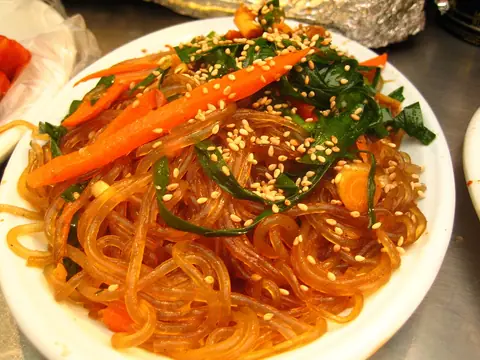
- Stir-frying the noodles, as in many noodle dishes, adds the calories of the oil they soak up.
- Sauces such as soy-based dressings, sesame oil or sweet chili sauce add calories on top of the noodles themselves.
- A loose bundle of dry noodles is hard to judge by eye, so portions served at home or in restaurants can vary widely.
Tips for logging it accurately
- Weigh the noodles dry before soaking or cooking, and log that dry weight using the dry entry for the most accurate count.
- If you can only weigh them after cooking, choose a cooked glass noodle entry instead of this dry one, since the numbers here apply to dry weight.
- Log cooking oil, sauces and add-ins separately, or snap a photo of the finished dish in BerryFit to capture everything on the plate.
Log Glass noodles (dry) in seconds
Snap a photo of your meal or search for Glass noodles (dry) in BerryFit to track calories and macros against your own daily target.
Frequently asked questions
How many calories are in a cup of dry glass noodles?
One cup of dry glass noodles (140 g) has 491 calories, with 120.5 g of carbs.
Are glass noodles high in protein?
No. Dry glass noodles have just 0.2 g of protein per 100 g, so almost all of their calories come from carbohydrates.
Do cooked glass noodles have fewer calories than dry ones?
Per gram, yes, because the noodles absorb water as they cook, which adds weight but no calories. The total calories of your portion stay the same as the dry amount you started with, plus anything added during cooking.
How do glass noodles compare to rice flour or semolina?
They are similar when dry: glass noodles have 351 calories per 100 g, compared with 366 for rice flour and 360 for semolina.
Similar foods
Calories in common foodsValues per 100 g from USDA FoodData Central (Noodles, chinese, cellophane or long rice (mung beans), dehydrated, FDC ID 174258); servings use USDA portion weights. Real foods vary by variety, ripeness and preparation.
The text on this page was written with the help of AI (Anthropic's Claude) and checked against the numbers in a separate review. The numbers themselves come only from USDA.