Korean · Lunch · Dinner
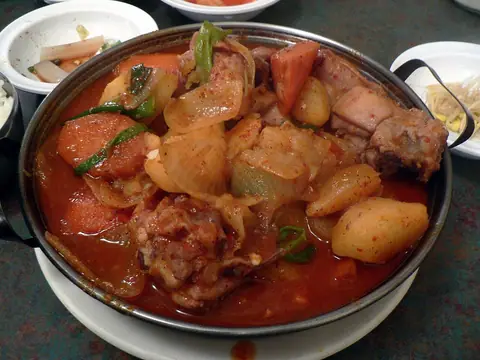
Jjimdak (Korean Soy-Braised Chicken with Glass Noodles)
찜닭
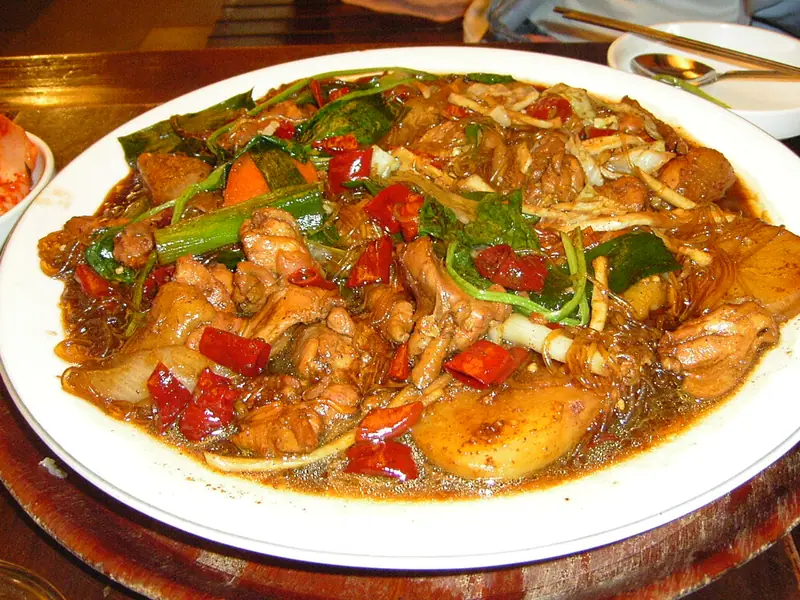
Tender chicken thighs braised in a glossy, garlicky soy sauce with potatoes, carrots and a gentle kick from dried chillies, finished with slippery sweet potato glass noodles that soak up the sauce. This lighter Andong-style version uses skinless thighs, less sugar, less soy sauce and just a splash of oil.
- Prep
- 30 min
- Cook
- 35 min
- Total
- 65 min
- Serves
- 4
Calories come from: Carbs 45% · Fat 22% · Protein 33%
Track it in BerryFit and see how it fits your own daily target. Get the app ›
Ingredients
For 4 servings- 700 g (about 7 thighs)boneless skinless chicken thighs, cut into large chunks
- 100 gsweet potato glass noodles (dangmyeon), dry
- 2 medium300 gpotatoes, peeled and cut into large chunks
- 1 large120 gcarrot, cut into thick chunks
- 1 medium150 gonion, cut into wedges
- 4 stalks40 ggreen onions, cut into 5 cm lengths
- 6 cloves18 ggarlic, minced
- 2 cm piece10 gfresh ginger, grated
- 4 smalldried red chillies
- 115 gfresh green chilli, sliced (optional)
- 4 tbsp64 greduced-sodium soy sauce
- 1 1/2 tbsp32 ghoney
- 2 tbsp30 grice wine
- 2 1/2 cups600 gwater
- 2 tsp9 gneutral oil
- 1/2 tspground black pepper
- 1 tsp5 gtoasted sesame oil
- 1 tsptoasted sesame seeds
Steps
- 1
Soak the glass noodles in a bowl of warm tap water for 30 minutes while you prep, then drain.
- 2
Stir together the soy sauce, honey, rice wine, garlic, ginger, black pepper and the 2 1/2 cups of water to make the braising sauce.
- 3
Heat the neutral oil in a large wide pot or deep pan over medium-high heat.
- 4
Add the dried chillies and stir for 20 seconds until fragrant.
- 5
Add the chicken and brown it on all sides, about 5 minutes.
- 6
Pour in the braising sauce and bring to a boil, skimming off any foam.
- 7
Add the potatoes and carrot, cover, and simmer over medium heat for 15 minutes.
- 8
Add the onion and the fresh green chilli if using, and simmer uncovered for 8 minutes until the potatoes are tender and the sauce has reduced slightly.
- 9
Check the chicken is cooked through to 74 °C / 165 °F in the thickest piece.
- 10
Add the drained noodles and green onions, tossing them into the sauce, and cook for 4 to 5 minutes until the noodles are soft and glossy.
- 11
Turn off the heat, drizzle with sesame oil and sprinkle with sesame seeds.
- 12
Serve hot straight from the pot.
Swaps, storage and make-ahead
Swaps
- For a gluten-free version, use tamari labelled gluten-free instead of soy sauce, and choose glass noodles and rice wine labelled gluten-free too.
- Swap the honey for the same amount of brown sugar or rice syrup if that is what you have on hand.
- Use dry sherry or mirin in place of the rice wine; if using mirin, cut the honey back a little since it is already sweet.
- Replace the potatoes with chunks of daikon radish or extra napa cabbage for a lighter, lower-starch braise.
Storage
Refrigerate leftovers in a covered container within 2 hours and eat within 3 to 4 days, reheating until steaming hot with a splash of water, since the noodles soak up the sauce and soften. It is best not to freeze this dish, as the potatoes and glass noodles turn mushy when thawed.
Make ahead
Mix the braising sauce and chop the chicken and vegetables up to a day ahead, keeping them covered in the fridge. For best texture, soak and add the glass noodles just before serving.
Nutrition values are for the recipe as written.
Track this in BerryFit
Log Jjimdak (Korean Soy-Braised Chicken with Glass Noodles) in one tap and see how it fits your remaining calories for today.
Or ask Coach Berry to change it
Allergens and nutrition
Contains: GlutenSoySesameSulphites
Check the labels of packaged ingredients for allergens and suitability for your diet.
Full nutrition
| Per serving (546 g) | Per 100 g | |
|---|---|---|
| Calories | 477 kcal | 87 kcal |
| Protein | 39 g | 7.1 g |
| Carbohydrates | 52.4 g | 9.6 g |
| of which sugars | 10.9 g | 2 g |
| Fiber | 4.1 g | 0.8 g |
| Fat | 11.3 g | 2.1 g |
| of which saturated | 2.4 g | 0.4 g |
| Sodium | 782 mg | 143 mg |
Nutrition is calculated from USDA FoodData Central data and may differ from what you cook.