Korean · Lunch · Dinner
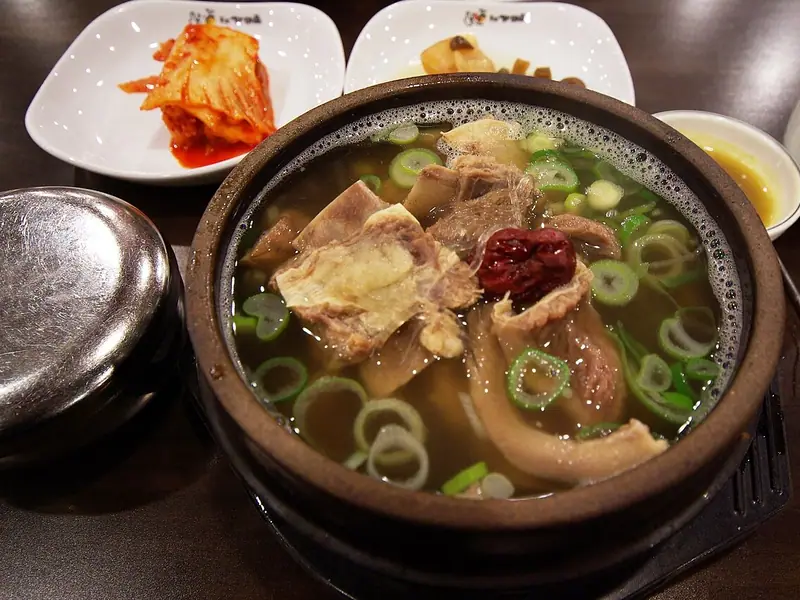
Galbitang (Korean Beef Short Rib Soup)
갈비탕
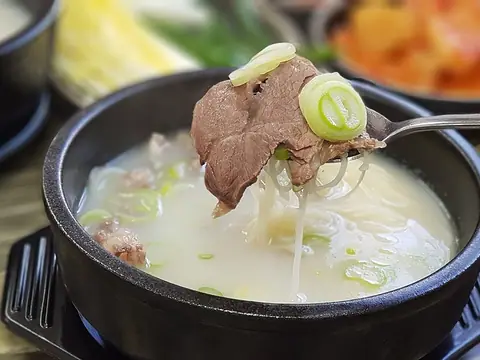
Tender beef short ribs simmered slowly with Korean radish, garlic and ginger into a clear, gently savoury broth, finished with glass noodles, egg ribbons and green onion. This lighter version trims and skims the fat for a clean-tasting, warming bowl.
- Prep
- 20 min
- Cook
- 110 min
- Total
- 130 min
- Serves
- 4
Calories come from: Carbs 28% · Fat 38% · Protein 34%
Track it in BerryFit and see how it fits your own daily target. Get the app ›
Ingredients
For 4 servings- 1 kg whole, bone-in (about 550 g edible meat)Bone-in beef short ribs (galbi), trimmed of visible fat
- 8 cups, discarded after blanching2,000 gWater for blanching (optional)
- 10 cups2,500 gWater for the broth
- 1/2 medium400 gKorean radish (mu) or daikon
- 1 medium, removed after simmering150 gOnion (optional)
- 8 cloves, removed after simmering24 gGarlic (optional)
- 1 thumb-sized piece, removed after simmering15 gFresh ginger (optional)
- 1 tbsp18 gKorean soup soy sauce (guk-ganjang)
- 1/2 tspSalt
- 1/2 tspGround black pepper
- 80 gSweet potato glass noodles (dangmyeon), dry
- 4 stalks60 gGreen onions
- 2 large100 gEggs (optional)
- 1 tspNeutral oil (for the egg) (optional)
Steps
- 1
Rinse the short ribs under cold water and trim off any thick fat.
- 2
Bring the blanching water to a boil, add the ribs and boil for 8–10 minutes.
- 3
Drain the ribs, discard the blanching water and rinse the ribs and pot clean.
- 4
Return the ribs to the pot with the broth water, onion (halved), garlic and ginger.
- 5
Bring to a boil, then lower to a gentle simmer, partly covered, for 60 minutes, skimming foam and fat from the surface.
- 6
Meanwhile, cut the radish into thick 4 cm chunks and soak the glass noodles in warm water for 30 minutes.
- 7
Add the radish to the pot and simmer for 30 minutes more, until the radish is translucent and the meat is tender.
- 8
Remove and discard the onion, garlic and ginger.
- 9
Skim off as much fat as possible with a ladle or paper towel.
- 10
Season the broth with the soup soy sauce, salt and pepper; taste before adding any more.
- 11
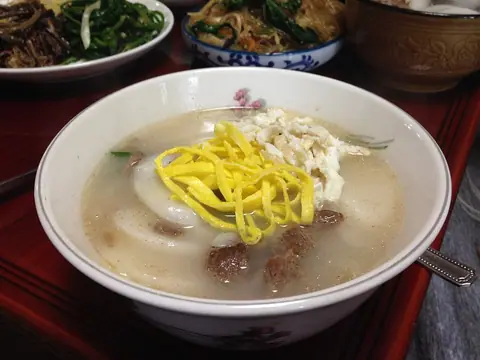
If using eggs, beat them, cook as a thin omelette in the oiled non-stick pan over low heat until fully set, then slice into thin strips.
- 12
Drain the noodles, add to the simmering soup and cook for 2–3 minutes until soft.
- 13
Slice the green onions.
- 14
Ladle ribs, radish, noodles and broth into bowls and top with green onion and egg strips.
Swaps, storage and make-ahead
Swaps
- Use daikon instead of Korean radish if your store doesn't carry mu; it cooks the same way.
- Replace guk-ganjang with regular soy sauce, using about the same amount and tasting before adding more, since regular soy sauce is less salty but darker and will colour the broth more.
- For a gluten-free bowl, use tamari or a soy sauce labelled gluten-free and choose glass noodles labelled gluten-free, as some soy sauces contain wheat.
- Skip the egg ribbons and add a few dried jujubes to the simmering broth for a gentle sweetness, as often served in Korean restaurants.
Storage
Refrigerate the cooled soup within 2 hours in a covered container and eat within 3 to 4 days, reheating until steaming hot. Store noodles separately if you can, since they turn soft and absorb broth, and freeze only the broth and meat (not the noodles or egg) for up to about 3 months.
Make ahead
Cook the ribs and broth a day ahead, refrigerate overnight and lift off the solidified fat before reheating. Cook the egg strips and slice the green onions shortly before serving, and add freshly soaked noodles to the hot soup at the end.
Nutrition values are for the recipe as written.
Track this in BerryFit
Log Galbitang (Korean Beef Short Rib Soup) in one tap and see how it fits your remaining calories for today.
Or ask Coach Berry to change it
Allergens and nutrition
Contains: SoyGlutenEggs
Check the labels of packaged ingredients for allergens and suitability for your diet.
Full nutrition
| Per serving (903 g) | Per 100 g | |
|---|---|---|
| Calories | 328 kcal | 36 kcal |
| Protein | 28.4 g | 3.1 g |
| Carbohydrates | 22.9 g | 2.5 g |
| of which sugars | 2.9 g | 0.3 g |
| Fiber | 2.2 g | 0.2 g |
| Fat | 13.9 g | 1.5 g |
| of which saturated | 6 g | 0.7 g |
| Sodium | 705 mg | 78 mg |
Nutrition is calculated from USDA FoodData Central data and may differ from what you cook.