Indian & South Asian · Lunch · Dinner
Rasam
ரசம் (Rasam)
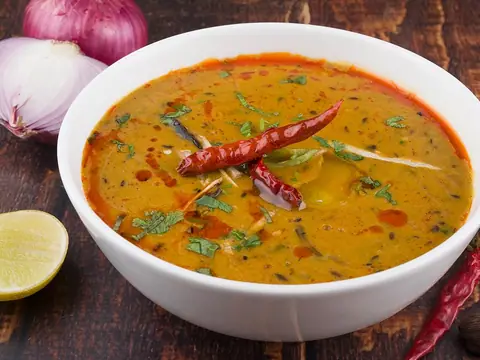
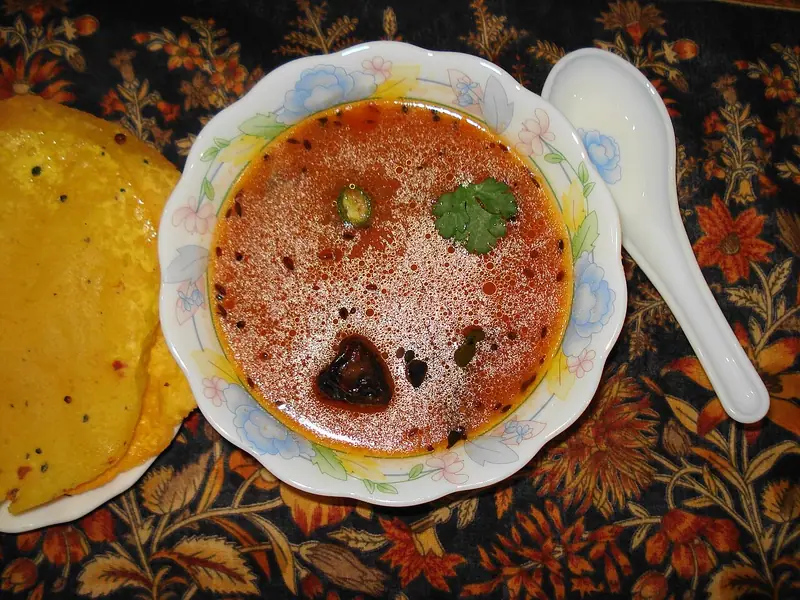
A thin, tangy South Indian broth of tamarind, ripe tomato, garlic and freshly crushed black pepper, lightly thickened with toor dal and finished with a sizzling mustard seed and curry leaf tempering. It is warming and aromatic, and good sipped from a cup or poured over rice.
- Prep
- 15 min
- Cook
- 40 min
- Total
- 55 min
- Serves
- 4
Calories come from: Carbs 60% · Fat 25% · Protein 15%
Track it in BerryFit and see how it fits your own daily target. Get the app ›
Ingredients
For 4 servings- 1/4 cup50 gToor dal (split pigeon peas)
- 1 1/2 cups375 gWater for cooking the dal
- 1 walnut-sized piece20 gTamarind pulp (seedless block)
- 1 cup250 gHot water for soaking tamarind
- 2 medium240 gRipe tomatoes, chopped
- 4 cloves12 gGarlic cloves, peeled
- 1 tspWhole black peppercorns
- 1 tspCumin seeds
- 1 tspCoriander seeds
- 1/4 tspGround turmeric
- 1 tsp6 gSalt
- 2 cups500 gExtra water for the broth
- 2 tsp9 gSunflower or other neutral oil
- 1/2 tspBlack mustard seeds
- 2 wholeDried red chillies
- 1 sprig (about 10 leaves)Fresh curry leaves
- 1 pinchAsafoetida (hing)
- 2 tbspFresh coriander leaves, chopped
Steps
- 1
Rinse the toor dal in several changes of water until the water runs mostly clear.
- 2
Put the dal in a pot with 1 1/2 cups water, bring to a boil, then cover and simmer for about 25 minutes until completely soft (or pressure cook for 3 whistles).
- 3
While the dal cooks, soak the tamarind in 1 cup hot water for 10 minutes.
- 4
Squeeze the softened tamarind with your fingers, then strain the liquid and discard the fibres.
- 5
Coarsely crush the peppercorns, cumin seeds, coriander seeds and garlic together using a mortar and pestle.
- 6
Mash the cooked dal with its water until smooth and set aside.
- 7
In a saucepan, combine the tamarind water, chopped tomatoes, turmeric, salt and the crushed spice-garlic mix.
- 8
Simmer for about 10 minutes, until the tomatoes break down and the raw tamarind smell fades.
- 9
Stir in the mashed dal and the 2 cups of extra water.
- 10
Heat gently until the rasam turns frothy on top, about 3 to 4 minutes, then turn off the heat without letting it boil hard.
- 11
In a small pan, heat the oil and add the mustard seeds; let them pop.
- 12
Add the dried chillies, curry leaves and asafoetida, and sizzle for a few seconds.
- 13
Pour the tempering over the rasam and stir.
- 14
Scatter over the chopped coriander leaves, then taste and adjust the salt before serving hot.
Swaps, storage and make-ahead
Swaps
- For a gluten-free rasam, use an asafoetida labelled gluten-free, since many brands are blended with wheat flour, or simply leave it out.
- If you can't find toor dal, use the same amount of split red lentils (masoor dal), which cook faster and mash just as smoothly.
- Swap the tamarind block for about 1 tsp of tamarind concentrate stirred into the hot water, or use the juice of half a lemon added at the end.
- If fresh curry leaves are hard to find, leave them out and add a little extra fresh coriander when serving.
Storage
Cool the rasam and refrigerate it in a covered container within 2 hours, then use it within 3 to 4 days. Reheat gently until steaming hot. The flavour softens over time, so it tastes best fresh.
Make ahead
Cook and mash the dal, strain the tamarind water and crush the spice-garlic mix up to a day ahead, keeping each covered in the fridge. Simmer the rasam and make the tempering just before serving.
Nutrition values are for the recipe as written.
Track this in BerryFit
Log Rasam in one tap and see how it fits your remaining calories for today.
Or ask Coach Berry to change it
Allergens and nutrition
Contains: MustardGluten
Check the labels of packaged ingredients for allergens and suitability for your diet.
Full nutrition
| Per serving (370 g) | Per 100 g | |
|---|---|---|
| Calories | 100 kcal | 27 kcal |
| Protein | 4 g | 1.1 g |
| Carbohydrates | 15.8 g | 4.3 g |
| of which sugars | 3.7 g | 1 g |
| Fiber | 3.6 g | 1 g |
| Fat | 3 g | 0.8 g |
| of which saturated | 0.3 g | 0.1 g |
| Sodium | 602 mg | 163 mg |
Nutrition is calculated from USDA FoodData Central data and may differ from what you cook.